Margin of Safety Calculator
Calculate margin of safety from design stress, safety factor, and material allowable.
Peak, limit, 3σ, or other design stress used for analysis.
Multiplier applied to design stress to establish required strength.
A-basis, B-basis, S-basis, or other applicable design allowable.
Margin of Safety Explained
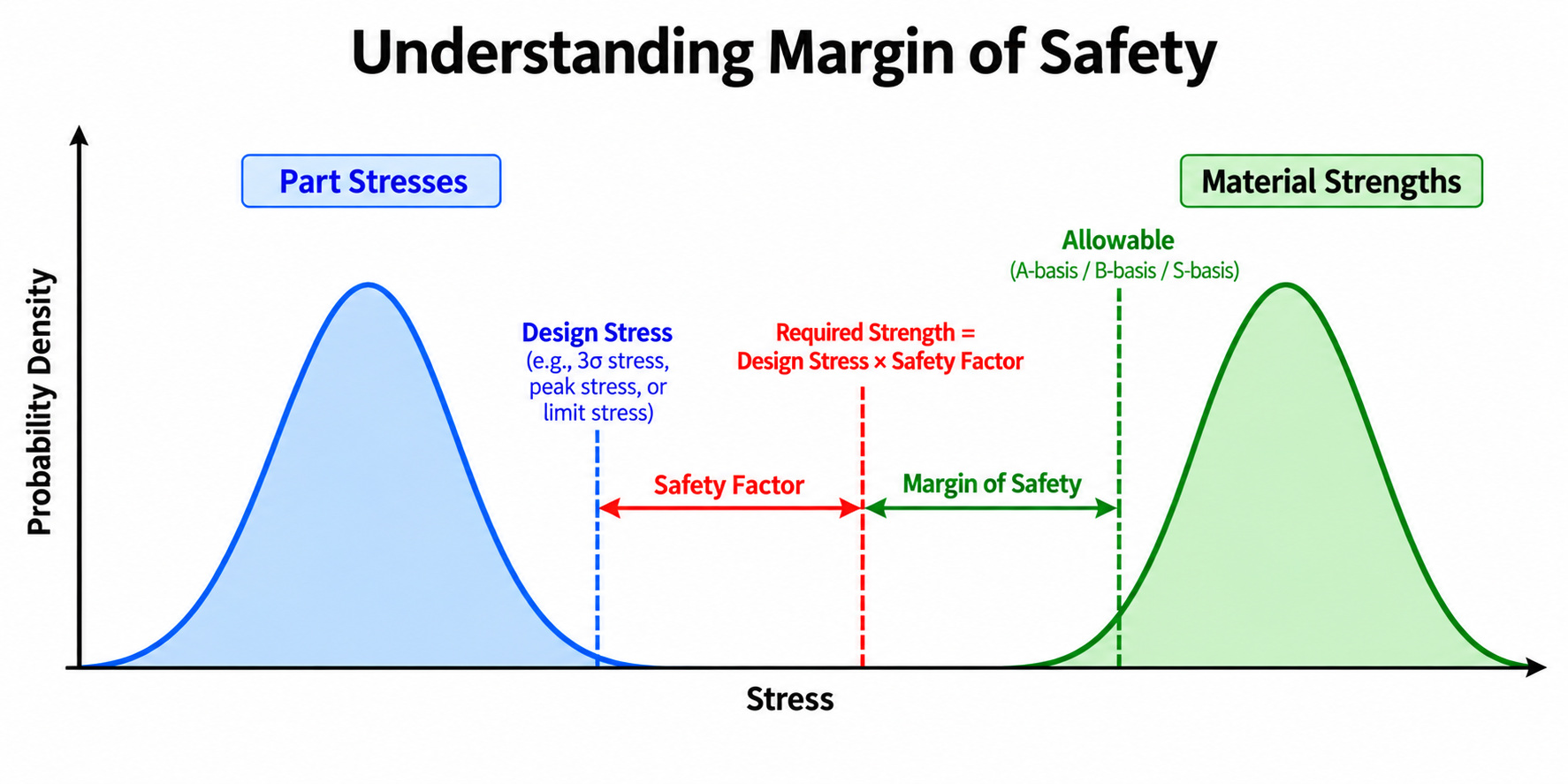
Margin of safety describes the remaining strength available after the required safety factor has been applied to the design stress. The design stress represents the value used for analysis, such as a peak stress, limit stress, or a statistical stress level such as 3σ. Applying the required safety factor converts that stress into a required strength.
The material allowable represents the strength that may be credited in design, often based on conservative values such as A-basis, B-basis, or S-basis allowables. Safety factor is the increase from design stress to required strength; margin of safety is the remaining separation between required strength and the allowable.
Interpretation of Results
A positive margin of safety means the allowable exceeds the required strength and the analyzed condition meets the criterion.
A zero margin means the required strength exactly equals the allowable. There is no remaining margin.
A negative margin means the required strength exceeds the allowable and the design does not meet the criterion.
In practical design work: positive margin, requirement met — pencils down.